
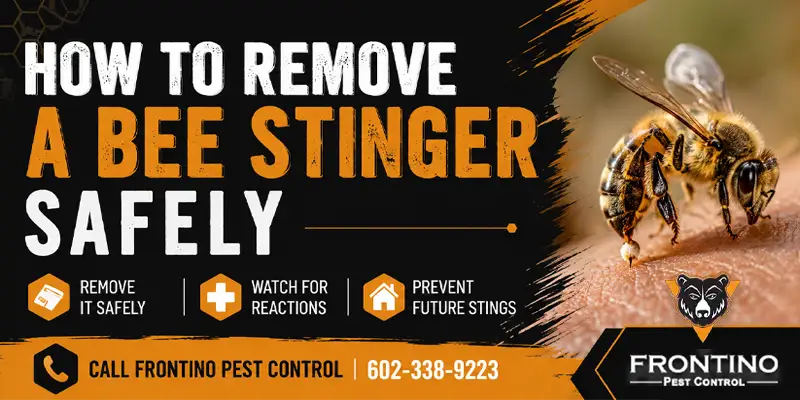
Getting stung by a bee can be painful and unexpected, especially when it happens around your home or property. While some stinging insects can sting multiple times, honey bees are different because worker honey bees typically leave their stinger behind after stinging.
Knowing how to respond quickly after a bee sting can help reduce discomfort and limit the amount of venom released into the skin. The most important step is to check the sting area and remove the stinger as soon as possible.
If stinging insects are becoming a problem on your Mesa property, call an experienced pest control company in Phoenix, Arizona promptly.
How to Remove a Bee Stinger Safely
If a honey bee has left its stinger behind, you may notice a small object stuck in the skin with a tiny venom sac attached. Because the stinger can continue releasing venom after the bee has flown away, removing it quickly is recommended.
There are a few ways to remove a bee stinger, but the key is to avoid unnecessary delay.
Scrape Out the Stinger
The safest first option is usually to gently scrape the stinger out rather than squeezing it.
Use a flat, firm object such as:
- A credit card
- A nail file
- The edge of a plastic card
- Another clean, flat surface
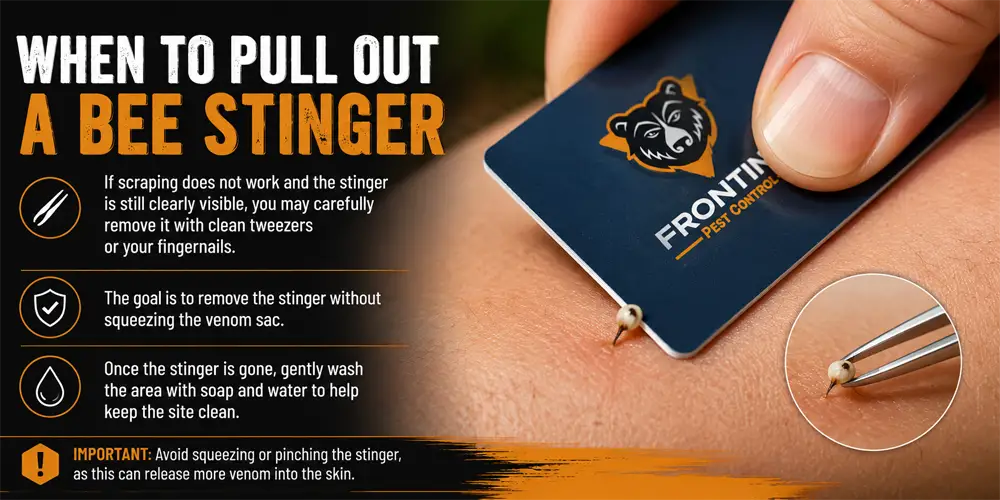
Hold the object against the skin and scrape across the sting site with steady pressure until the stinger is removed.
Avoid pinching or squeezing the stinger if possible, since pressure on the venom sac may push additional venom into the skin.
If you do not have a scraping tool available, clean fingernails may also work. Be sure to wash your hands and the sting area before and after removing the stinger.
If the area is uncomfortable, applying a cold pack or ice wrapped in a cloth can help numb the skin and reduce swelling before attempting removal.
When to Pull Out a Bee Stinger
If scraping does not work and the stinger is still clearly visible, you may carefully remove it with clean tweezers or your fingernails.
The goal is to remove the stinger without squeezing the venom sac. Once the stinger is gone, gently wash the area with soap and water to help keep the site clean.
Watch For Signs of an Allergic Reaction
Most bee stings cause temporary pain, redness, swelling, or irritation. However, some people experience more serious reactions.
Seek medical attention immediately if you experience symptoms such as:
- Trouble breathing
- Swelling of the face, lips, or throat
- Dizziness
- Nausea
- Widespread hives
- A severe or worsening reaction
Anyone with a known allergy to bee or hornet stings should take extra precautions and have a plan in place before spending time outdoors.
How to Prevent Future Bee Stings
While avoiding every bee encounter is not always possible, reducing bee activity around your Mesa home can lower the chance of future stings.
Bee prevention starts with identifying and addressing potential nesting areas. Bees and other stinging insects may build nests in:
- Wall voids
- Roof areas
- Trees and shrubs
- Outdoor structures
- Other hidden areas around your property
If you notice increased bee activity, a hive, or signs of an infestation, professional pest control in Mesa can help safely identify the problem and determine the best solution.
Call Frontino Pest Control – Bee Experts
If bees or other stinging insects are becoming a problem around your property, call Frontino Pest Control at 602-338-9223. Our experienced Mesa AZ exterminators provide inspections to identify infestations and recommend effective treatment options.
